From Traditional to Digital: The 5 A's of Marketing

We’re in an era where we no longer sell products and services, we sell experiences and solutions. We need to see the full strategic map we use in our marketing campaigns and judge the results of our work against our goals. There are models that help with this, and one of them is the 5 A’s of marketing.
In Marketing 4.0, Philip Kotler shares tips on how to turn consumers (or “netizens”) into brand advocates in a world moving from traditional to digital. One of those tips is the 5A model and how to use it. You can think of the 5A model as a strategic guide.
The 5 A’s are five words that start with A: Aware, Appeal, Ask, Act and Advocate.
Like many marketing concepts, it looks very simple because it’s broken into categories and stages, but once you dive in, it opens up a whole world.
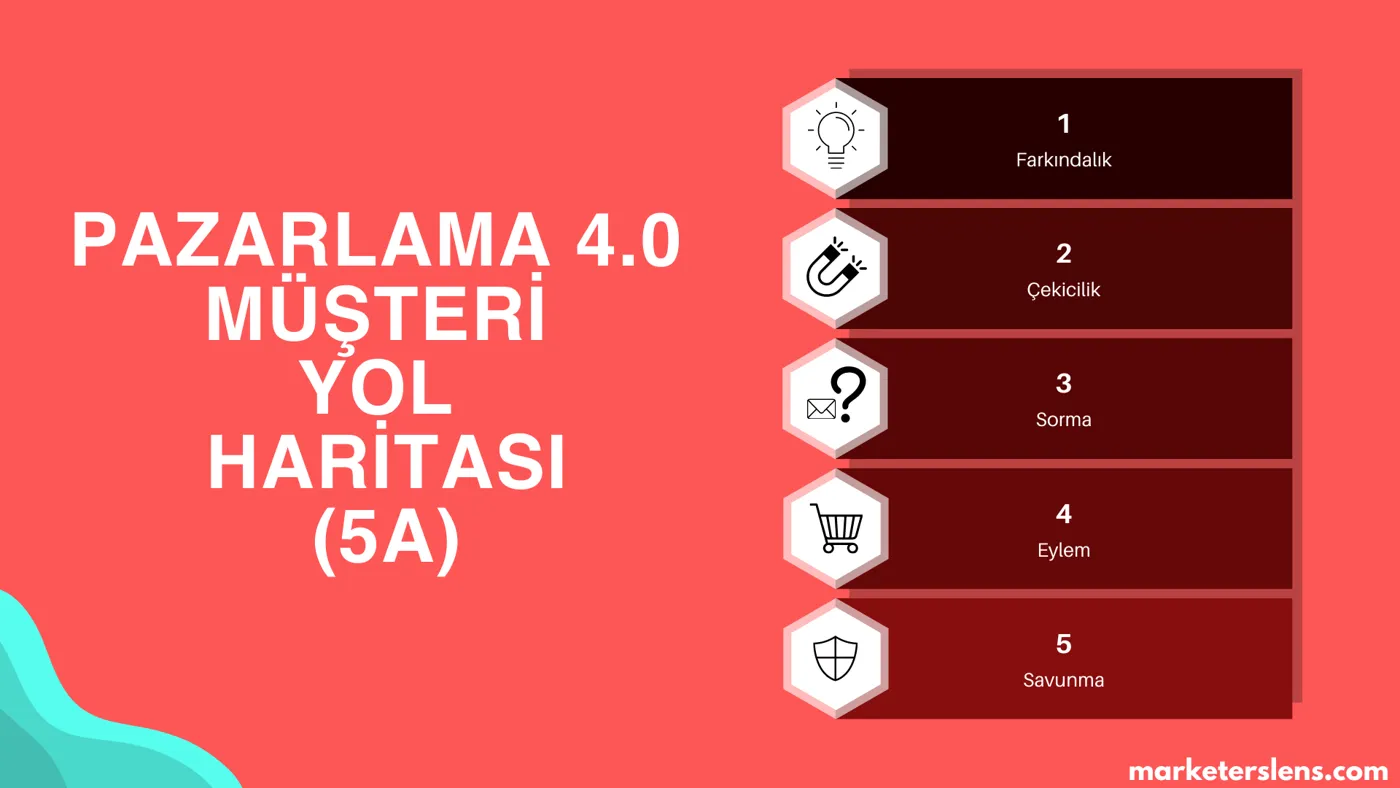
The 5 A’s are a customer path set out by Philip Kotler. It’s similar to the AIDA model (Attention, Interest, Desire, Action), introduced by E. St. Elmo Lewis and used in advertising since the 19th century, but it focuses on the changes the digital world has brought.
The most important feature of the 5A model is its focus on non-brand factors that affect customers’ buying behaviour, like social media, influencers and online reviews. Another standout feature is the methods it uses to build customer loyalty.
As we said, the 5A model has five stages. Two important terms are used alongside it. We call them marketing productivity metrics.
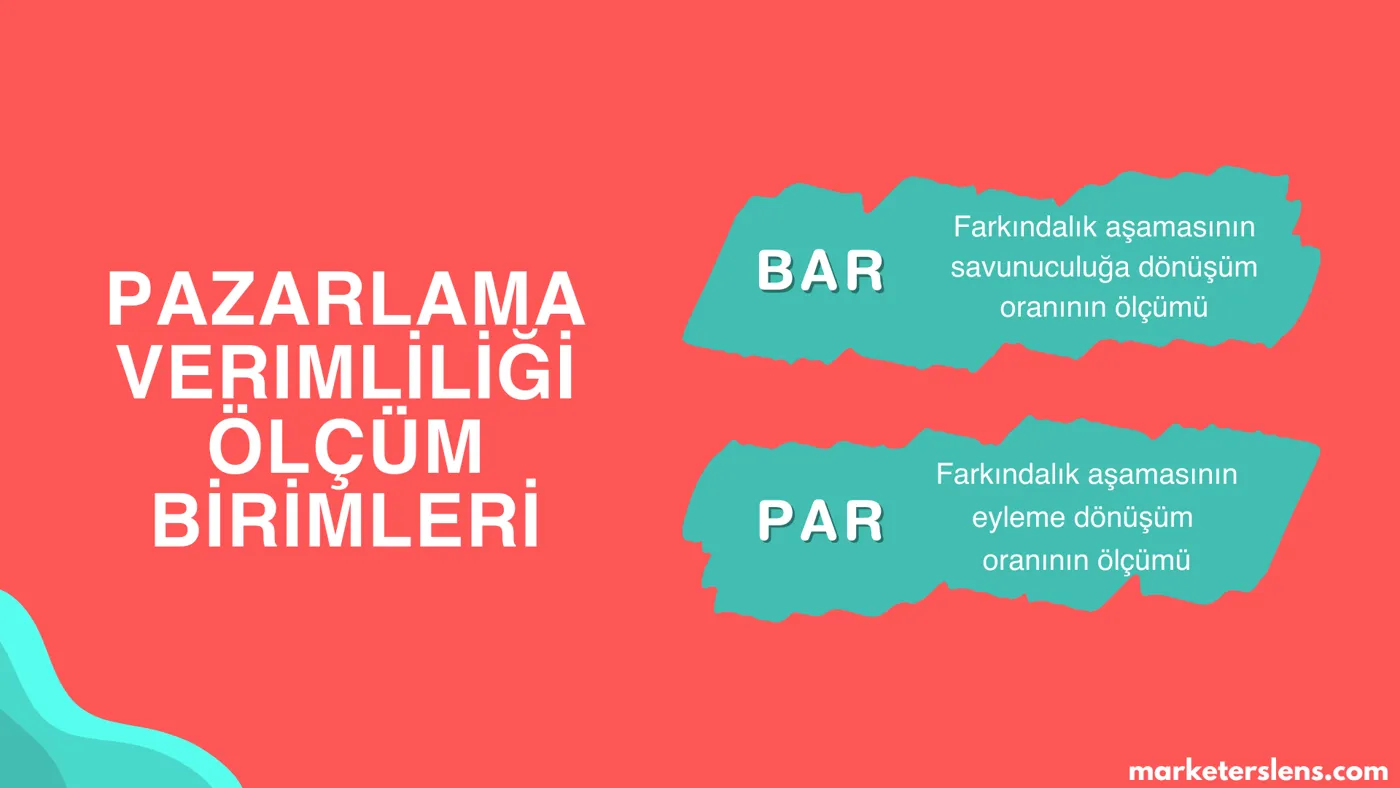
These ratios, used to measure conversions at the act and advocate stages, are called PAR (purchase action ratio) and BAR (brand advocacy ratio).
PAR: how much of the awareness stage turns into a purchase.
BAR: how much of the awareness stage turns into advocacy.
Say that out of 100 customers who are aware of your brand, 60 find it appealing, 32 research it further, 15 buy a product and 4 recommend the brand to others. That makes your BAR 4%.
There are other ratios between these stages worth looking at too. For example, 32 out of the 60 people who found your product appealing went on to research it, a 53% success rate, which can be an important indicator when needed.
Customers sometimes skip stages. In fast-moving consumer goods especially, a customer might find a brand or product they didn’t know before appealing and buy it, skipping the awareness stage altogether.
What do BAR and PAR tell us?
If everyone who bought became an advocate, PAR and BAR would be equal, but that only happens in a perfect world. If the 5A model is an important part of your strategy, it’s fair to say that the closer PAR and BAR are, the more successful your marketing campaigns are. For example, a low PAR with PAR and BAR very close together is probably a great sign for a brand serving a niche audience. We can’t say the same for brands serving broader audiences.
So how do you turn a buyer into an advocate? Treating the moment a customer buys as a success in itself goes against modern marketing thinking. Sadly, we still see businesses fall into this trap. Yet when we look at the world’s biggest companies, they usually deliver an amazing post-purchase experience. I want to underline the word experience. The rise of UX is impossible to ignore. Google has even said that the experience users have on a site affects its search ranking. Businesses should create unforgettable experiences for their customers, and that starts with thinking in stages. All the work that serves this goal starts the moment a potential customer notices you and never ends.
Now let’s go through each stage of the 5A model.
1. How do we make potential customers aware?
Awareness has its own stages: solution awareness, product awareness and brand awareness. Your work should take these into account. For example, if you already make a product people buy often, you don’t need to build solution awareness. That would be like Samsung trying to explain smartphones in 2021. On the other hand, if you’re an innovative business offering new solutions, it pays to introduce your solution first. Watch how Steve Jobs presented the first iPhone to see the tactics he used.
If you want to introduce your brand, you can use both traditional marketing and digital marketing techniques. A TV ad will create familiarity with your brand name.
As a starting point, keyword work makes you easier to find in search engines. Of course, when using keywords you need to build a buyer’s journey. The buyer’s journey decides which keyword is aimed at which customer.
There’s no need to explain what a gamepad is to someone who searches “buy new Xbox gamepad”. But if someone searches “which gamepad should I choose?”, greet them with a useful blog post.
You can read more about this in Grow Your Business With Keywords in 3 Steps, including which keyword planners to use.
2. How do you appeal to an aware customer?
There are two key strategies in marketing: push and pull. Push strategies give intermediaries a reason to sell your product. Pull strategies give your potential customers a reason to choose your brand.
Consumers rarely find a product or brand appealing on their own. Of course, the appeal of a sales channel can spark desire for the product itself. You’ve probably noticed the premium coffee shelf at an upmarket supermarket. That kind of eye-catching display works at the awareness stage, and it also helps position your brand in the customer’s mind. Positioning your brand in the consumer’s mind is the most important win for your product’s appeal.
When you open the website of Trendyol, a big e-commerce marketplace, you’ll see it puts its own brands up front and uses plenty of “X% off” in its visuals. That’s how it creates appeal and nudges you to click.
In both examples, the consumer is very likely there with the intention of buying, and since they’re there, they’re already aware of these brands.
There are other ways to create appeal. An advocate might recommend a product to someone they know. A person might see desirable content about the product on social media, or a review they saw on Google might do the trick.
These kinds of references are the most effective way to create appeal. And since the main goal of the 5A model is to create brand advocates, we can talk about a loop here.
The important thing is not to leave it to chance whether customers skip these stages, but to deliver the right message at every touchpoint.
3. A customer who finds your product appealing starts researching. What will they find?
Your potential customer is now seriously interested in your product. Before buying, they want other people’s opinions. They check complaint sites and forums, ask family and friends, and browse a few communities. So what do they find?
I often notice this on online retailers’ sites: reviews written in perfect language, all five stars, all full of incredible praise. It’s impossible not to think they look fake. I know I’ve changed my mind about buying something just because of that. So it’s easy to conclude that only getting good reviews might not be good for your brand. Many consumers ignore the reviews at the extreme ends of the spectrum.
You need to look after customers who had a bad experience with your brand, and stop people at the ask stage from forming negative feelings about it. Things can always go wrong, and you shouldn’t avoid trying to fix them. Reply to customers, talk to them and improve their experience. These are important steps that raise customer lifetime value and keep your business profitable five years from now.
This stage might also be the first time a customer deliberately interacts with your brand, which makes it critical. I mentioned reviews first because, for many people, the most effective research is asking others. But the social posts, blog articles and video guides you publish as part of your content strategy will also give people important information about your product.
A customer convinced by what they learned at the ask stage moves on to act.
4. They’ve finished researching and are ready to act. Now what?
Once someone has decided to act, the smallest bit of friction can make them change their mind. That’s a big threat, especially if you’re in a competitive sector and your brand has lots of alternatives.
You need to give people who’ve decided to act a flawless experience.
For example, forcing someone who saw your product on Instagram and tapped the action button to download your app or create an account first is a bad user journey. Maybe you can let them sign up at the same time as they fill in the purchase details.
That’s why, in digital marketing, it’s critical to decide what your ad is for. If you want more app downloads, your campaign needs to be built around that.
In the end, “act” doesn’t only mean buying.
Here’s an example of a bad act-stage experience from a big brand. On one major grocery chain’s website, every time you went to your basket, a “buy these too” pop-up appeared. Leave the basket page, come back, and there it was again, every single time. The “you bought these, and here are discounts on things you don’t need” message could have sat at the side of the page, but they chose differently. In my view, giving that experience to a customer who’s ready to buy, with a full basket, is no different from sending them a link to a competitor.
5. Advocate
Have you ever heard someone close to you say “You should definitely get an iPhone” or “This brand’s fabric is amazing and it’s eco-friendly too”? Maybe you’ve said it yourself. You’re probably an advocate for some brands.
There are two kinds of brand advocates:
- The first recommend the brands they love even when nobody asks. These people usually wear the identity the brand offers.
- The second are passive advocates. They’re even more loyal than the first kind, but they don’t fully advocate unless they have a reason to. They act when they come across negative views about a brand they love, or when someone asks their opinion. That’s why “brand defender” suits them better.
When what people believe is right clashes with what they do, it’s called cognitive dissonance. People don’t want to face it, so we have defence mechanisms.
Because of this psychological fact, people are very likely to keep choosing the brands they recommend to others for a long time. Recommending one brand to someone and choosing another yourself would create cognitive dissonance. That makes brand advocacy grow like an avalanche. Unless they’re badly disappointed (and sometimes even then), the person will stay loyal. This proves that brand advocates are your most valuable customers.
Of course, these advocates can also create a toxic brand image. We’ve seen that often in PC vs console wars and iPhone vs Android wars.
You don’t even need to sell your product to create fans. Some customers reach the advocate stage without ever acting. Not every Tesla advocate drives a Tesla, for example.

Moving people from awareness to advocacy: the O Zone
At the start I said the biggest value of Marketing 4.0 is that it takes outside factors into account. The “O Zone” is how it does that. According to Kotler, marketers need to consider three factors when moving customers from awareness to advocacy:
- Own influence
- Others’ influence
- Outer influence
Outer influence is the brand’s communication with the customer, and it’s usually the first influence that reaches them. Selective perception can make people ignore things they weren’t already aware of, so outer influence is often followed by others’ influence: the person starts noticing what other people think. Finally, they weigh up what they’ve found for themselves. That’s their own influence.
Sometimes a person’s own influence is very strong. Their cultural values, past experiences or knowledge can play the biggest role in what they buy. On the other hand, a customer buying in a product category for the first time will lean heavily on outer influences, which makes them choose the loudest brands.
If outer influence matters most to your customers, focus on communication.
If others’ influence matters most, community management will be a big budget item for you.
And if own influence plays the biggest role, the quality of your after-sales service will be critical.
To sum up, marketing keeps reinventing itself in today’s tech world, so marketers need to keep reinventing themselves too. Marketing 4.0 lays a scientific foundation for marketing in the digital world, which is why the 5 A’s are a model we’ll keep running into.