How to Write a TikTok One Creator Brief That Gets You Ads, Not Just Content
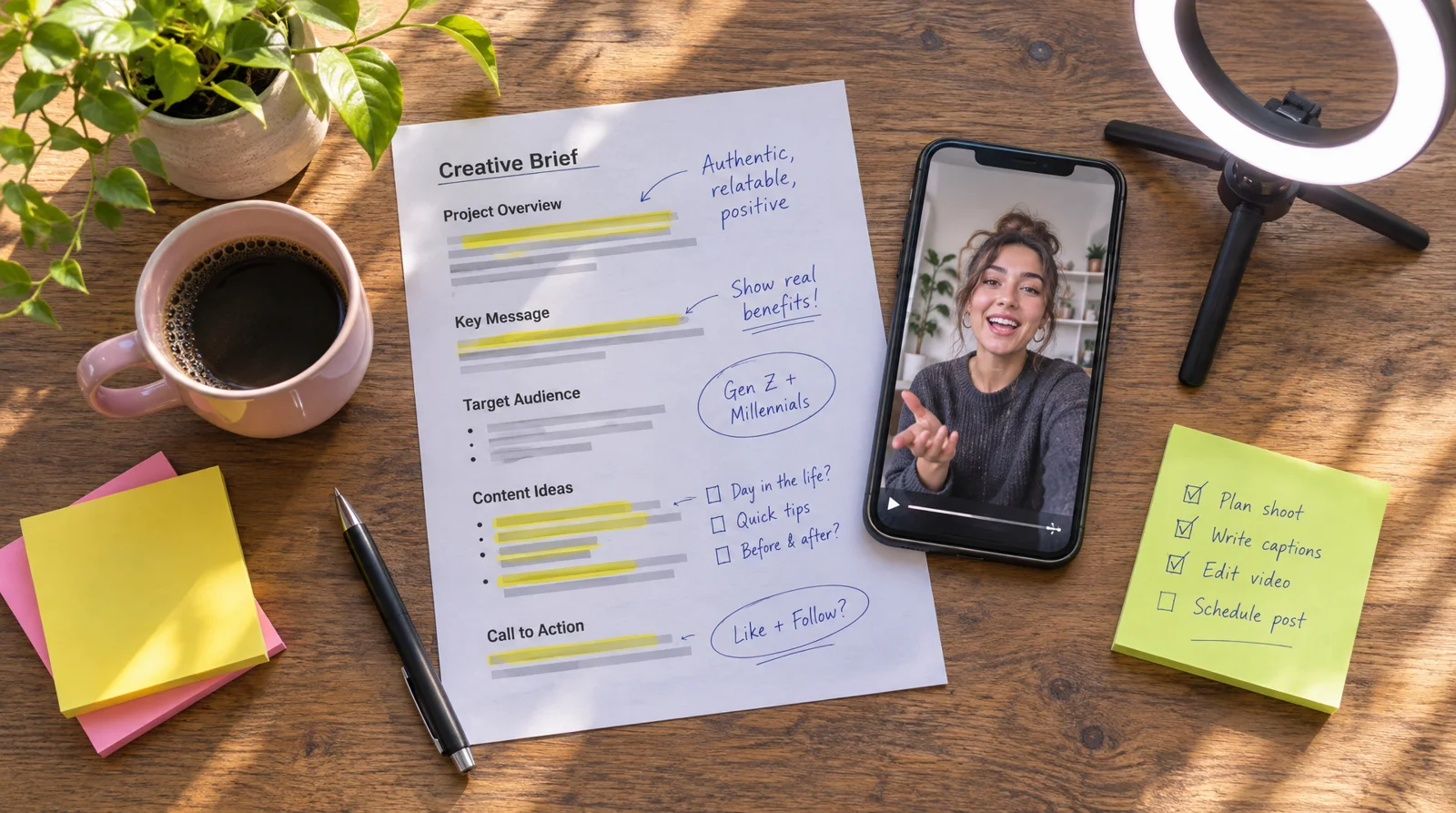
TikTok One is TikTok’s hub for working with creators: you post a campaign, creators apply or get invited, they make videos, and you can run the best ones as ads. It’s one of the most efficient ways I know to get a steady flow of native creator content for an app.
But the platform only solves logistics. Whether you get ten ads you can actually scale or ten videos you’ll never use comes down to one document: the brief.
I’ve written a lot of these, worked with over a thousand creators, and reviewed more incoming videos than I can count. Here’s what I’ve learned about briefs that produce ads.
The core tension: freedom vs. performance
Creators are on TikTok because they know how to make content their audience watches. If your brief turns them into actors reading your script, you lose the very thing you’re paying for.
But you’re not buying content for its own sake. You need videos that hook in the first second, show the product clearly, say only true things, and drive installs.
A good brief resolves this by being strict about facts and outcomes, and loose about delivery. Tell creators exactly what must be true and what the video needs to achieve. Let them decide how to say it.
What every brief needs
1. One sentence on the goal
“We want people who call family abroad to install the app and make their first call.” Not a paragraph about brand values. Creators skim, so the goal goes first and stays short.
2. Who it’s for
Describe the viewer in human terms: who they are, what situation they’re in, what annoys them. “International students who still pay roaming to call home” gives a creator far more to work with than an age range.
3. One key message
Not five benefits. One. If a video tries to say everything, it says nothing. If you have several angles to test, put them in several briefs or let creators pick one angle from a short list.
4. Hook ideas, not hook scripts
Give three to five hook directions with an example each:
- A confession: “I wasted so much money before I found this.”
- A question: “Why are you still paying for this?”
- A demo: start on the screen, mid-action.
- A reaction: their genuine face when they see the price.
Then explicitly invite them to use their own. The best hook in a batch is often one you didn’t write.
5. Product truth, written as a fact sheet
This is where most briefs fail. Creators will repeat whatever they understand about your product, so give them a short, checked list:
- What the app does, in plain words.
- Exact prices, offers and codes, if any.
- What’s included and what isn’t.
- Which markets it works in.
Every number and claim in the brief should come from one source of truth that your team has checked. If a creator says something wrong on camera, you can’t run the video.
6. Must say and must not say
Two short lists. Must say: the app name, the one key benefit, the call to action. Must not say: competitor names, claims you can’t support, anything regulated in your category, promises like “free forever” if they aren’t true.
7. Show the product properly
Ask for a clear screen recording or a phone-in-hand shot of the key moment. In app ads, the moment the product works on screen is often the most important second of the video. Specify it.
8. Deliverables and specs
- Vertical 9:16, length range (for example 20 to 45 seconds).
- Captions on, important content inside the safe zones.
- Raw footage or alternate hooks if you want to make variations.
- Whether you want an authorisation code so the post can run as a Spark Ad from the creator’s account.
- Usage rights: where and how long you can use the video.
9. Examples
One or two reference videos, labelled “for vibe, not to copy”. Examples communicate tone faster than any paragraph.
What to leave out
- Full scripts, unless the format truly needs them.
- Brand guideline PDFs. Pull out the three rules that matter.
- Long backstory about the company.
- Vague adjectives like “fun, authentic, engaging”. Every brief says that. Show it with an example instead.
A good brief fits on one screen.
Reviewing what comes back
When videos come in, I review them with the same lens I use for any creative test:
- Does the first second stop the scroll? Read hook and hold rates once the post has data.
- Is every claim correct? Check it against the fact sheet before anything runs as an ad.
- Is the product moment clear?
- Is it ready to launch, or does it need an edit? A new hook, captions or an end card can turn a decent video into a strong ad.
I sort every incoming video into ready to launch, needs an edit, or not usable, and I track them per listing so I always know which campaigns are producing and which have gone quiet.
Turning creator videos into a testing engine
The real value of TikTok One isn’t any single video. It’s a steady stream of human-made content you can test, learn from and iterate:
- Run the best organic performers as ads, ideally from the creator’s account.
- Cut new hooks onto winning bodies to extend their life.
- Feed winning angles back into the next brief.
- Use AI to iterate on what creators prove works: new hooks, new formats, new markets.
That last loop is why I think creator content is more valuable than ever, not less. AI can test angles at volume, but a great creator video can have a ceiling nothing else reaches. I wrote about that in AI Made Ads Cheap. That’s Exactly Why UGC Matters More Than Ever.
A one-screen brief template
Goal: one sentence. Viewer: who they are and what annoys them. Key message: one benefit. Hook directions: three to five, plus “your own idea welcome”. Facts: checked list of what’s true, prices and codes included. Must say / must not say: two short lists. Product moment: what must be on screen. Specs: 9:16, length, captions, safe zones, raw files, Spark Ads code, usage rights. Examples: one or two, for vibe.
Strict about the facts, loose about the delivery. That’s the whole trick.
In my AI Creative Machine, briefs like this are drafted by a brief-writer skill and every claim is checked against the brand’s fact sheet before a creator ever sees it.